
The Bachelor of Science in Aerospace Engineering Laboratory has gotten an upgrade from AELab v1.0 to AELab v1.5. The old version was an old beaten up shack seemingly lost among the structures expected in the space age. With the upgrade, the AE laboratory is likened to the F-86 SABRE with twenty-first century technology installed.
The procurement of various laboratory equipments such as the alternative energy kit, electronics laboratory kit, radio control kits, etc have greatly improved the competency of the Aerospace Engineering department in providing a complete and well-rounded training of the country’s future aerospace engineers.
Among notable improvements that can be easily seen once you enter the doors of the laboratory are a computer workstation, a mini-library and the freshly painted student lockers which contain their laboratory coveralls among other things.
The laboratory is a central part of Indiana Aerospace University’s aerospace engineering program. It is here where the creative minds of the students are honed and their ideas come to life. Its importance is seen among the current student projects. This includes an investigation on the viability of a dual powered car that runs on solar power and a fuel cell. Other student projects being done there is a rocket model and a full scale ultra light aircraft (still in the drawing board).
More upgrades are being worked on at the time of this writing and is expected to make the current AELab version jump to version 3.0 before the next school year opens. Among the things to expect are the construction of a portable subsonic wind tunnel and the procurement of additional laboratory tools and equipments.
The improvements are mainly due to the untiring efforts of both the BSAE students and teaching staff and the admirable commitment of the school administration to modernize the school’s facilities.
For more information, visit www.iau.com.ph
Thursday, December 4, 2008

Aerospace Engineering Program in IAU
Aerospace engineering is defined as a branch of engineering that deals with the science of design, analysis, and construction of aircraft and spacecraft and its systems. It is divided into two overlapping branches namely, Aeronautical Engineering, which deals mostly with crafts that operate within the Earth’s atmosphere, and Astronautical Engineering, which deals with crafts that operates beyond the atmosphere into the outer space. Aerospace engineering is also sometimes referred to as “rocket science.”
A study in aerospace engineering usually includes an in-depth learning of mechanics and physics of fluids, aircraft and spacecraft structures and materials, instrumentation, control and estimation, human and automation, propulsion and energy conservation, and aeronautical and astronautical systems.
After your five years of education in Indiana Aerospace University (IAU), you should be able to conceptualize technical problems and their solutions, design: study and comprehend processes that lead to solutions, develop, and test the results of research, development and designs. At the same time, you would be adept in research, manufacturing, operation and maintenance, marketing and sales, and management.
As an aerospace engineer, what are your possible career options after graduation? In the answer lies the good news. Aerospace engineers work in just anywhere – employed in a variety of industries, among them:
· Commercial airline companies (PAL, Cebu Pacific, Boeing, Airbus, etc)
· Aerospace industry
· Academia
· Government (CAAP, DND, Congress, etc)
· Communications industry (communication satellites, GPS, etc)
· Automotive industry
· Manufacturing
· Computer industry (software and hardware)
· Entrepreneurs
· Law firms
· Medicine
By now, you would have been convinced to become an aerospace engineer. Companies hire the best ones, so, how would you become the best? The following desired engineer attributes should guide you in your studies:
· A good grasps of the core engineering science fundamentals (mathematics, statistics, IT, physics).
· A good understanding of the design and manufacturing processes.
· An understanding of the context in which engineering is practiced i.e. history, environment, business and the society.
· A multidisciplinary system perspective (looking beyond aerospace engineering and respecting other disciplines)
· Good overall communication skills.
· High ethical standards.
· Possesses a profound understanding of the importance of teamwork.
· Curiosity and a lifelong desire to learn.
· Has an ability to think critically and creatively as an individual and in a team.
As the space age progresses, it needs young curious minds like yours. Be part of the trailblazers and help propel humanity deeper into the last frontier. Bachelor of Science in Aerospace Engineering is right for you.
For more information visit the IAU website at: www.iau.com.ph
A study in aerospace engineering usually includes an in-depth learning of mechanics and physics of fluids, aircraft and spacecraft structures and materials, instrumentation, control and estimation, human and automation, propulsion and energy conservation, and aeronautical and astronautical systems.
After your five years of education in Indiana Aerospace University (IAU), you should be able to conceptualize technical problems and their solutions, design: study and comprehend processes that lead to solutions, develop, and test the results of research, development and designs. At the same time, you would be adept in research, manufacturing, operation and maintenance, marketing and sales, and management.
As an aerospace engineer, what are your possible career options after graduation? In the answer lies the good news. Aerospace engineers work in just anywhere – employed in a variety of industries, among them:
· Commercial airline companies (PAL, Cebu Pacific, Boeing, Airbus, etc)
· Aerospace industry
· Academia
· Government (CAAP, DND, Congress, etc)
· Communications industry (communication satellites, GPS, etc)
· Automotive industry
· Manufacturing
· Computer industry (software and hardware)
· Entrepreneurs
· Law firms
· Medicine
By now, you would have been convinced to become an aerospace engineer. Companies hire the best ones, so, how would you become the best? The following desired engineer attributes should guide you in your studies:
· A good grasps of the core engineering science fundamentals (mathematics, statistics, IT, physics).
· A good understanding of the design and manufacturing processes.
· An understanding of the context in which engineering is practiced i.e. history, environment, business and the society.
· A multidisciplinary system perspective (looking beyond aerospace engineering and respecting other disciplines)
· Good overall communication skills.
· High ethical standards.
· Possesses a profound understanding of the importance of teamwork.
· Curiosity and a lifelong desire to learn.
· Has an ability to think critically and creatively as an individual and in a team.
As the space age progresses, it needs young curious minds like yours. Be part of the trailblazers and help propel humanity deeper into the last frontier. Bachelor of Science in Aerospace Engineering is right for you.
For more information visit the IAU website at: www.iau.com.ph
Saturday, November 22, 2008
CONTENT ADVISORY
All High Quality streaming videos are transferred to a new site for faster loading.
The new blog at onlineboobtube.blogspot.com features more high quality streaming media that includes 24/7 movie channels, primetime tv programs, Live sports channels, Music and much, much more!
Channel Guide (click links to watch):
MOVIES CHANNELS:
DRAGON BALL Z AND GT COLLECTION
24/7 COMEDY MOVIES
24/7 SCI - FI MOVIES
24/7 ADVENTURE MOVIES
24/7 ACTION MOVIES
SPORTS CHANNELS:
FULL CONTACT FIGHTING(MMA) - UFC, PRIDE, K1, ETC...
SPORTS NEWS
RACING AND MORE TV
CLASSIC AND LIVE BOXING
COMBAT TV
BASEBALL TV
INTERNATIONAL NEWS CHANNELS:
CCTV - 9
MUZIC CHANNELS:
UNDERGROUND MUSIC
EDUCATIONAL CHANNELS:
NASA TV LIVE
AND MORE...
The new blog at onlineboobtube.blogspot.com features more high quality streaming media that includes 24/7 movie channels, primetime tv programs, Live sports channels, Music and much, much more!
Channel Guide (click links to watch):
MOVIES CHANNELS:
DRAGON BALL Z AND GT COLLECTION
24/7 COMEDY MOVIES
24/7 SCI - FI MOVIES
24/7 ADVENTURE MOVIES
24/7 ACTION MOVIES
SPORTS CHANNELS:
FULL CONTACT FIGHTING(MMA) - UFC, PRIDE, K1, ETC...
SPORTS NEWS
RACING AND MORE TV
CLASSIC AND LIVE BOXING
COMBAT TV
BASEBALL TV
INTERNATIONAL NEWS CHANNELS:
CCTV - 9
MUZIC CHANNELS:
UNDERGROUND MUSIC
EDUCATIONAL CHANNELS:
NASA TV LIVE
AND MORE...
Spider Astronauts: The Next Generation
No its not Spiderman.
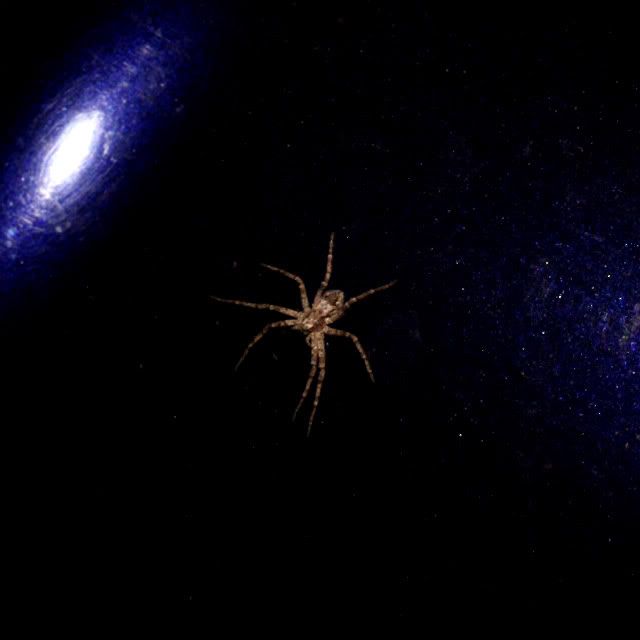
Yes, a real spider!
Spiders aboard the International Space Station(ISS) has adopted to space environment and created amazing webs. It took the spiders a week or so to adopt before they made space their home. This astonishing accomplishment by the lowly spiders has amazed scientists and engineers alike.
The spiders are aboard the International Space Station as part of an educational project.
Watch them work:
E=MC squared Proven After More Than a Century!

It is done folks. Albert Einstein's celebrated formula e = mc squared was finally proven by a group of physicists!
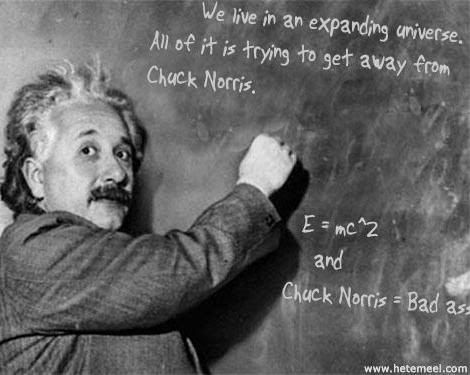
(No, Chuck Norris is not the proof!!! :-)
This is an excerpt from an AFP news clip on how they did it:
"A brainpower consortium led by Laurent Lellouch of France's Centre for Theoretical Physics, using some of the world's mightiest supercomputers, have set down the calculations for estimating the mass of protons and neutrons, the particles at the nucleus of atoms.
According to the conventional model of particle physics, protons and neutrons comprise smaller particles known as quarks, which in turn are bound by gluons.
The odd thing is this: the mass of gluons is zero and the mass of quarks is only five percent. Where, therefore, is the missing 95 percent?"
CLICK TO READ THE WHOLE STORYWednesday, November 12, 2008
First Attempt @ Lighter-than-Air Aircraft
AE Freshmen LTA Design Soars
October 11, 2008 - It was a cool morning, with the sun just coming up, when ten enthusiastic and bright eyed students launched their Lighter-Than-Air (LTA) aircraft in the school gymnasium. The air is filled with the students’ excitement as they buzzed around making their final preparations – giant balloons are filled with helium, batteries and motors are checked, the control systems are tested. It is Race Day.
The LTA design is the freshmen’s introduction to Aerospace Engineering and Design. These future aerospace engineers spent the whole semester planning and working on their design. Divided into groups, they set out to outdo each other competing to have the best thought-out, best done aircraft. What seemed to be child’s play in the beginning turned serious as they discovered that payload, reliability of the structures and aesthetics are not meant to be together. The LTA design is limited to an overall weight of 1.75 kgs excluding the three 1-meter balloons. To complicate things further, the balsa wood structure must be constructed in a way that will minimize weight and strong enough to carry the engine, batteries and the control systems. And, that’s not the end of it; they must also find a way to make their designs pleasant to the eye.
The first problem they encountered during the race day was how to stabilize the aircraft. They solved it by turning trashes to gold. Rocks, wood chips, spare batteries were used as counterweights. With every group dealing with their own problems, the original course around the basketball court was reduced to a mere 25 meters dash. Flying the LTA’s was a cocktail of excitement, learning and sorrow. Like in every real world problem, some groups succeeded while some failed. All in all, it sure was a fun filled semester.
The activity allowed the future engineers to experience the intricacies of aircraft design and development the right aerospace engineer’s mindset early on in their studies. With their experience and lessons learned, they are on the right path to becoming the pillars of their countries’ own aerospace industries.
Watch video clip of the freshmen at work below.
The LTA design is the freshmen’s introduction to Aerospace Engineering and Design. These future aerospace engineers spent the whole semester planning and working on their design. Divided into groups, they set out to outdo each other competing to have the best thought-out, best done aircraft. What seemed to be child’s play in the beginning turned serious as they discovered that payload, reliability of the structures and aesthetics are not meant to be together. The LTA design is limited to an overall weight of 1.75 kgs excluding the three 1-meter balloons. To complicate things further, the balsa wood structure must be constructed in a way that will minimize weight and strong enough to carry the engine, batteries and the control systems. And, that’s not the end of it; they must also find a way to make their designs pleasant to the eye.
The first problem they encountered during the race day was how to stabilize the aircraft. They solved it by turning trashes to gold. Rocks, wood chips, spare batteries were used as counterweights. With every group dealing with their own problems, the original course around the basketball court was reduced to a mere 25 meters dash. Flying the LTA’s was a cocktail of excitement, learning and sorrow. Like in every real world problem, some groups succeeded while some failed. All in all, it sure was a fun filled semester.
The activity allowed the future engineers to experience the intricacies of aircraft design and development the right aerospace engineer’s mindset early on in their studies. With their experience and lessons learned, they are on the right path to becoming the pillars of their countries’ own aerospace industries.
Watch video clip of the freshmen at work below.
Saturday, October 25, 2008
Wednesday, October 1, 2008
Final Examinations
Final examinations for Aerospace Engineering are on October 8-10,2008.
Other courses will follow the following schedule:
Aircraft Structures I: October 3, 2008 Rm 101; 1100hrs
Fundamentals of Aerodynamics: October 6, 2008 Rm 109E; 1400hrs
Sub-Sonic Aerodynamics: October 8, 2008 AE Laboratory; 1500hrs
High Speed Aerodynamics: October 8, 2008 AE Laboratory; 1700hrs
Rotor and Propeller Design:
Deadline of submission for completed 2-Blade Prop Design October 8, 2008
Aircraft Design I:
Deadline for submission for Preliminary Aircraft Sizing: October 11, 2008
Aircraft Design Analysis:
Deadline of submission: October 10, 2008
Intro to Aerospace Engineering
Lighter-Than-Air(LTA) Trial Race: October 7, 2008
Race Day : October 10, 2008
Please be guided accordingly.
Good Luck and Have a Happy Vacation!!!
Note to visitors: Please use the comment form for ebook and course notes requests. Thank You.
Other courses will follow the following schedule:
Aircraft Structures I: October 3, 2008 Rm 101; 1100hrs
Fundamentals of Aerodynamics: October 6, 2008 Rm 109E; 1400hrs
Sub-Sonic Aerodynamics: October 8, 2008 AE Laboratory; 1500hrs
High Speed Aerodynamics: October 8, 2008 AE Laboratory; 1700hrs
Rotor and Propeller Design:
Deadline of submission for completed 2-Blade Prop Design October 8, 2008
Aircraft Design I:
Deadline for submission for Preliminary Aircraft Sizing: October 11, 2008
Aircraft Design Analysis:
Deadline of submission: October 10, 2008
Intro to Aerospace Engineering
Lighter-Than-Air(LTA) Trial Race: October 7, 2008
Race Day : October 10, 2008
Please be guided accordingly.
Good Luck and Have a Happy Vacation!!!
Note to visitors: Please use the comment form for ebook and course notes requests. Thank You.
Monday, August 18, 2008
SubSonic Aerodynamics
update....update....update....update....update...
Each entry enables you to check key specifications for any aircraft including dimensions, performance, structure, landing gear, power plants, and
armaments. Plus, with details of the world's aircraft manufacturers and their programmes, you can identify key contracts and customers.
Key contents include:
Download Jane's All the Worlds Aircraft NOW!(Click Below)
download book now
(password:iau)
***The book file above has a file extension .djvu which can only be opened by a .djvu reader.
download free djvu reader here (click link). Download djvu reader now.
instructions:
1. download the book "Jane's All the Worlds Aircraft" from the link above.
2. download the djvu reader.
3. after downloading drag and drop the book file in the djvu reader icon.
4. if a pop-up dialog box appears, click run or ok.
or
after downloading the book and djvu reader, double click the djvu reader icon. click run. when the reader opens.click file and choose open. go to where you save the book and select the book file. click open or ok.
=====================================================================
DOWNLOAD THE NOTES PART 1 NOW
click here to download
password to download: iau
due to difference in ms office version used i am uploading an ms word document version of the notes for ms word 97 - 2003. click the link below to download it.
speed and climb performance '97-'03.doc
password: iau
thanks
======---====---====---====---+++++++-----*****//////++++
Notice to the students of Subsonic Aerodynamics:
Due to technical problems, I wasn't able to upload the notes as informed last week. But, I will be giving the notes on Wednesday for photocopying so be sure to attend on Wednesday, August 20, 2008.
It will be your responsibility to read and understand the notes provided. Discussion among yourselves is greatly encouraged. Do not hesitate to approach me though for any clarification or further discussion on any part of the hand outs.
For the Semi-Finals, the following activity will be the basis of your grades:
Student teams (two or three students to be grouped on Wednesday, August 20, 2008) are required to estimate the performance characteristics(based on the notes provided) of actual airplanes. Each team selects an airplane, obtains its geometric, mass, and thrust data, and computes performance. Teams must submit a completed performance analysis not later than September 8, 2008.
Jane's All The World's Aircraft 2004-2005
English | 860 Pages
Edited by Paul Jackson MRAeS
ISBN: 0 7106 2614 2
(c) 2004, Jane's Information Group Limited
Jane's All the World's Aircraft sets the standard in aviation reference, providing exhaustive technical detail on over 950 civil and military aircraft currently being produced or under development by more than 550 companies. Complete with photographs and line drawings to aid recognition and comparison, this authoritative resource provides you with the ability to evaluate competitors, identify potential buyers, and business partners, and examine aircraft equipment.English | 860 Pages
Edited by Paul Jackson MRAeS
ISBN: 0 7106 2614 2
(c) 2004, Jane's Information Group Limited
Each entry enables you to check key specifications for any aircraft including dimensions, performance, structure, landing gear, power plants, and
armaments. Plus, with details of the world's aircraft manufacturers and their programmes, you can identify key contracts and customers.
Key contents include:
Fixed- and rotary-wing aircraft
Lighter than air
Air-launched missiles
Aero-engines
First flights
Aerospace Calendar
Official records
International aircraft registration prefixes
Propeller technology
Lighter than air
Air-launched missiles
Aero-engines
First flights
Aerospace Calendar
Official records
International aircraft registration prefixes
Propeller technology
Download Jane's All the Worlds Aircraft NOW!(Click Below)
download book now
(password:iau)
***The book file above has a file extension .djvu which can only be opened by a .djvu reader.
download free djvu reader here (click link). Download djvu reader now.
instructions:
1. download the book "Jane's All the Worlds Aircraft" from the link above.
2. download the djvu reader.
3. after downloading drag and drop the book file in the djvu reader icon.
4. if a pop-up dialog box appears, click run or ok.
or
after downloading the book and djvu reader, double click the djvu reader icon. click run. when the reader opens.click file and choose open. go to where you save the book and select the book file. click open or ok.
=====================================================================
DOWNLOAD THE NOTES PART 1 NOW
click here to download
password to download: iau
due to difference in ms office version used i am uploading an ms word document version of the notes for ms word 97 - 2003. click the link below to download it.
speed and climb performance '97-'03.doc
password: iau
thanks
======---====---====---====---+++++++-----*****//////++++
Notice to the students of Subsonic Aerodynamics:
Due to technical problems, I wasn't able to upload the notes as informed last week. But, I will be giving the notes on Wednesday for photocopying so be sure to attend on Wednesday, August 20, 2008.
It will be your responsibility to read and understand the notes provided. Discussion among yourselves is greatly encouraged. Do not hesitate to approach me though for any clarification or further discussion on any part of the hand outs.
For the Semi-Finals, the following activity will be the basis of your grades:
Student teams (two or three students to be grouped on Wednesday, August 20, 2008) are required to estimate the performance characteristics(based on the notes provided) of actual airplanes. Each team selects an airplane, obtains its geometric, mass, and thrust data, and computes performance. Teams must submit a completed performance analysis not later than September 8, 2008.
Monday, August 11, 2008
Aircraft Structures I
UPDATED*******UPDATED******UPDATED******UPDATED
NEW NOTES FOR AIRCRAFT STRUCTURES 1
DOWNLOAD NEW CLASS NOTES (1) NOW
DOWNLOAD NEW CLASS NOTES (2) NOW
password: iau
NOTE: THE COVERAGE FOR THE PRE-FINAL EXAMS WILL INCLUDE ONLY THE NEW NOTES DOWNLOADED FROM THE ABOVE LINKS.
*****************************************************************************
EXCERPTS FROM NOTES A: WINGS
Download Structures 1 Notes (A) Now by Clicking Here
Download Structures 1 Notes (B) by Clicking Here
NEW NOTES FOR AIRCRAFT STRUCTURES 1
DOWNLOAD NEW CLASS NOTES (1) NOW
DOWNLOAD NEW CLASS NOTES (2) NOW
password: iau
NOTE: THE COVERAGE FOR THE PRE-FINAL EXAMS WILL INCLUDE ONLY THE NEW NOTES DOWNLOADED FROM THE ABOVE LINKS.
*****************************************************************************
EXCERPTS FROM NOTES A: WINGS
Download Structures 1 Notes (A) Now by Clicking Here
Download Structures 1 Notes (B) by Clicking Here
INTRODUCTION
As already described, different sizes and types of aircraft need different
construction. This applies to the mainplanes, or wings, as much as to any other
part. Each wing is basically made up of two parts – the internal structure, such
as spars and ribs, and the skin, which can be of fabric, metal or composites –
although the distinction between structure and skin may not be readily
apparent in modern fast jets or large transport aircraft.
construction. This applies to the mainplanes, or wings, as much as to any other
part. Each wing is basically made up of two parts – the internal structure, such
as spars and ribs, and the skin, which can be of fabric, metal or composites –
although the distinction between structure and skin may not be readily
apparent in modern fast jets or large transport aircraft.
SPARS, RIBS, STRINGERS AND SKIN
Wings are made up of large number of components, even with integrally
machined structures, but the structural part consists of main types of
component:
Spars
Most of the lift, and hence shear force, that occurs on the wing is collected
together into spars. Spars run spanwise, in other words from the root (where
the wing is attached to the fuselage) to the tip. Most wings contain two spars
– the front and rear spars – but it is quite common for wings to have more than
this. This is particularly so with swept wings on transport aircraft, which often
have a short spar, the auxiliary spar or kick spar, which helps to support the
undercarriage, and provides a location for the inboard flaps.
Read more by downloading the entire notes here:
1. Notes A: WINGS
2. Notes B: FUSELAGE
password for download is: iau
P.S Please read your notes before coming to class. I might give unannounced
quizzes or graded recitations once in a while.
Saturday, July 19, 2008
Fundamentals of Aerodynamics
You can download the initial installment to the notes on Fundamentals of Aerodynamics by clicking here.
or by clicking below.
Download Fundamentals of Aerodynamics notes Now!
Password to download: iau
Note: Use the comment section below to post your questions, clarifications, suggestions, and requests. They will be answered promptly.
Thank you and good luck!
===============================================
Download additional reference materials by clicking the titles below. Password: iau
Introduction to Aerodynamics of Flight
Basic Aerodynamics
**********************************************************
You will need the following to open the files:
1. Microsoft Word.
2. Adobe pdf reader or any pdf reader. Download now.
or by clicking below.
Download Fundamentals of Aerodynamics notes Now!
Password to download: iau
Note: Use the comment section below to post your questions, clarifications, suggestions, and requests. They will be answered promptly.
Thank you and good luck!
===============================================
Download additional reference materials by clicking the titles below. Password: iau
Introduction to Aerodynamics of Flight
Basic Aerodynamics
**********************************************************
You will need the following to open the files:
1. Microsoft Word.
2. Adobe pdf reader or any pdf reader. Download now.
Friday, July 11, 2008
1st Year: Chapter 4 + Installers
Please download the files located in the folder below. Password is: ae
Note: Download all files and put them in one folder.
Contents:
A. Installers
1. Java
2. Quicktime
3. Shockwave
Chapter 4
1. Movie Clip
2. Java Applets
Read Chapter 4 of your book and practice with the applets contained below. Good Luck and have fun.
We will have a quiz on Friday, July 18, 2008.
How to Download?
1. Enter the password below and hit enter.
2. You will be redirected to another window.
3. Click on the folder that you want to download. When the contents appear, scroll to the left and click on the download icon(a green arrow pointing downwards). When you are prompted to save file, click yes.
4. Repeat step 4 until you have downloaded all the files.
5. For installers, click the downloaded files and follow the instructions to install it to your computer. For the Chapter 4 contents, just click on the files and wait.
Note: Download all files and put them in one folder.
Contents:
A. Installers
1. Java
2. Quicktime
3. Shockwave
Chapter 4
1. Movie Clip
2. Java Applets
Read Chapter 4 of your book and practice with the applets contained below. Good Luck and have fun.
We will have a quiz on Friday, July 18, 2008.
How to Download?
1. Enter the password below and hit enter.
2. You will be redirected to another window.
3. Click on the folder that you want to download. When the contents appear, scroll to the left and click on the download icon(a green arrow pointing downwards). When you are prompted to save file, click yes.
4. Repeat step 4 until you have downloaded all the files.
5. For installers, click the downloaded files and follow the instructions to install it to your computer. For the Chapter 4 contents, just click on the files and wait.
Sunday, July 6, 2008
5th Yr: Sample Wt. Estimates for Jet Transport


Note: All examples are based on a series of aircraft design books by Dr. Jan Roskam


Movie:The Astronaut Farmer

Title: The Astronaut Farmer
Quality: DVDRip-XviD
Year: 2007
Directed by: Michael Polish
Genre: Adventure / Drama
Runtime: 104 min
Country: USA
Starring: Billy Bob Thornton, Virginia Madsen, Bruce Willis, Bruce Dern, Tim Blake Nelson...
Synopsis:
From the time he was a child, Charles Farmer had only one goal: to be an astronaut. Earning his degree in aerospace engineering and joining the Air Force as a pilot, Farmer was a natural for NASA's astronaut training program and was well on his way when a family situation forced him to drop out. But Farmer was not a man to let anything stand in the way of a dream. He spent the next decade and every cent he had building his own rocket in a barn on his ranch in Story, Texas, working toward the day when he could triumphantly launch it into space. By himself. Sharing his vision are his wife Audie and their children daughters Sunshine and Stanley, and 15 year old Shepard, already a budding engineer and eager to serve as "mission control" on the big day.
Watch:
(click the links below to watch movie)
Part 1
Part 2
Part 3
Part 4
Part 5
Part 6
Thursday, July 3, 2008
5th yr: Aircraft Design 1,W Estimates
AIRCRAFT DESIGN 1
(note: click on the pictures if they are partly hidden.)
Chapter 1: Aircraft Preliminary Sizing
Required for initial aircraft sizing:
1. Payload and type of payload
2. Range and/or loiter requirements
3. Cruise speed and altitude
4. Field length for take-off and landing
5. Fuel reserves
6. Climb requirements
7. Maneuvering requirements
8. Certification base i.e. experimental, FAR 23, FAR 25, military
Aircraft design parameters to define for Chapter 1:
- Gross Take-off Weight, WTO
- Empty Weight, WE
- Maximum Required Take-off Thrust, TTO/Take-off Power, PTO
- Wing Area, S and Wing Aspect Ratio, A
- Maximum Required Lift Coefficient (Clean), CLmax
- Maximum Required Lift Coefficient for Take-off, CLmaxTO
- Maximum Required Lift Coefficient for Landing, CLmaxL

Evolution of a Mission Specification and its relation to Preliminary Sizing and Design
I. Estimating Take-off Gross Weight, WTO, Empty Weight, WE, and Mission Fuel Weight, WF
Method for Rapid Estimation of WTO, WE, WF
Applicable to:
- Homebuilt Propeller Driven Aircrafts
- Single Engine Propeller Driven Airplanes
- Twin Engine Propeller Driven Airplanes
- Agricultural Airplanes
- Business Jets
- Regional Turbopropeller Driven Aircrafts
- Transport Jets
- Military Trainers
- Fighters
- Military Patrol, Bomb and Transport Aircrafts
- Flying Boats, Amphibious and Float Aircrafts
- Supersonic Cruise Airplanes

Where:
WOE/OWE is the airplane operating weight, empty
WF is the mission fuel weight
WPL is the payload weight
WOE = WE + Wtfo + Wcrew
Where:
WE = empty weight
Wtfo = weight of all unusable fuel and oil
Wcrew = weight of the crew required to operate the airplane
Sometimes,
WE = WME + WFEQ
Where,
WME = manufacturers empty weight
WFEQ = fixed equipment weight, this includes: avionics equipments, air conditioning equipment, auxiliary power unit (APU), furnishings and interiors, other equipments essential in the operation of the aircraft.
Steps in determining WTO, WE, WF:
- Determine the mission payload weight, WPL
- Guess a likely value of take-off weight, WTOguess
- Determine the mission fuel weight WF
- Calculate the tentative value for WOE from: WOE tent= WTOguess - WF -WPL
- Calculate a tentative value for WE from: WE tent = WOE tent - Wtfo- Wcrew
Note: at this stage WTO, = 0.05% or more of the take-off weight, is often neglected.
6. Find the allowable value of WE
7. Compare the values of WEtent and for WE as obtained from steps 5 and 6. Next, make and adjust to the value of WTOguess and repeat steps 3 through 6. Continue this process until the values of WEtent and WE agree with each other to within 0.5%.
II. Determination of
Mission Payload Weight, WPL usually consists of passenger and baggage, cargo, military loads such as ammunitions, bombs, external tanks, pods, etc. For passenger in a commercial airplane, an average weight of 175 lbs per person and 30 lbs of baggage is assumed for short to medium distance flights and 40 lbs baggage weight per passenger for long distance flights.
Crew Weight, Wcrew is calculated based on the following considerations:
Commercial:
The crew consists of the cockpit crew and the cabin crew. The number of people in each crew depends on the airplane and its mission. It depends also to the total number of passenger carried. http://www.risingup.com/fars/info/part91-533-FAR.shtml states the minimum cabin crew per passengers. An average of 175 lbs and 30 lbs for baggage is a reasonable assumption for flight crews.
Military:
200 lbs is assumed per crew because extra gear carried.
Note: For part 23 aircrafts where owners are also pilots, it is not unusual to have the crew weight as part of the payload.
III. Guessing a Value of Take-off Weight, WTOguess
A guess of the value is based on similar airplanes by comparing their mission specifications. If no reasonable comparison can be made, the you have to make a wise guess.
IV. Determination of
WF = WF used + WF res
Where:
WF used = fuel actually used during the mission
WF res = fuel reserve required for the mission . Refer to FAR Part 21 for min. reserves


An Example of a
Important: The fuel – fraction for each phase is defined as the ration of end weight to begin weight.
Phase 1: The Engine starts and warms-up. Begin weight is WTO. End weight is W1. The fuel-fraction for this phase is by definition: W1/ WTO . Refer to the table below for values.

Phase 2: Taxi. W2/W1
Phase 3: Take-off. W3/W2
Phase 4: Climb to Cruise altitude and accelerate to cruise speed. W3/W4. However, sometimes it is desirable to calculate the value from:
For propeller – driven airplanes:

Note: Vcl is in mph. Refer to table 2.2 for guidance.
For Jet airplanes:
Ecl = (1/Cj)cl (L/D)cl ln(W3/W4)
Note: For Cj refer to table 2.2 for guidance.

Phase 5. Cruise. W5/W4. This ratio can also be estimated from Breguet’s Range Equation.
For Propeller- Driven Airplanes (Note: Rcr is in statute miles = 5280ft)

For Jet Airplanes (note: Rcr is in nautical miles = 6076 ft, usually provided in mission specifications)

Phase 6: Loiter. W6/W5
Phase 7: Descent. W7/W6
Phase 8: Landing, Taxi, and Shut-down. W8/W7.
Calculate
Mff = (W1/WTO)xi=1i=7(Wi+1/ Wi)
WFused can now be calculated…
WFused = (1 - Mff) WTO
WF = WFused + WF res
Finding the Allowable value given WTO for WE

The values of A and B are provided below:

WARNING:
The primary structure to which the data above is based is constructed from metallic materials. If you wish to obtain an estimate of WE for an airplane which is to be made of composite materials, be guided with the following:
- Determine which airplane components are to be made from composite materials.
- Determine an average value for Wcomp/ Wmetal for the new airplane. The allowable value for WE from the data above must now be multiplied by Wcomp/Wmetal.

Note:
- The weight reduction factors above should be used when changing from 100% conventional aluminum to 100%composite construction.
- For lithium-aluminum alloys used in the fuselage, wing, or empennage, a weight reduction of 5 – 10% may be claimed relative to conventional aluminum alloys.
Wednesday, July 2, 2008
3rd Year: MATERIALS BOOK
DOWNLOAD "MATERIALS" BOOK HERE
note: Please click on the link above to download book.
How to use book:
1. Download the file.
2. Unpack it using WinRAR or WinZIP
3. Read book using a pdf reader.
DOWNLOAD "MATERIALS" BOOK HERE
note: Please click on the link above to download book.
How to use book:
1. Download the file.
2. Unpack it using WinRAR or WinZIP
3. Read book using a pdf reader.
DOWNLOAD "MATERIALS" BOOK HERE
AE 110: Intro to Aerospace Engineering
Home Work No. 2
Due date: July 11, 2008
Note: click link to download your homework. Answer only Problem Set No. 2.
Download Homework Here
Foil Sim
Access FoilSim here.
Note: You need an Internet connection to access FoilSim. If you choose to work at home without internet connection, download the applet and save it to your own hard drive. FoilSim needs a JAVA plug in to work.
UPDATE! UPDATE! UPDATE! UPDATE!
Paper Plane Design and Construction Book
- Read this great and informational book about the design and construction of paper airplanes. Lots of examples are presented with easy to follow pictorial instructions.
DOWNLOAD HERE
Due date: July 11, 2008
Note: click link to download your homework. Answer only Problem Set No. 2.
Download Homework Here
Foil Sim
Access FoilSim here.
Note: You need an Internet connection to access FoilSim. If you choose to work at home without internet connection, download the applet and save it to your own hard drive. FoilSim needs a JAVA plug in to work.
UPDATE! UPDATE! UPDATE! UPDATE!
Paper Plane Design and Construction Book
- Read this great and informational book about the design and construction of paper airplanes. Lots of examples are presented with easy to follow pictorial instructions.
DOWNLOAD HERE
Subscribe to:
Comments (Atom)


 Posts
Posts

